
The After-School Restraint Collapse: Why Your Kid Explodes the Minute They Walk Through the Door
Published by The Able Blog | Date: 2026-08-20
TL;DR
- The Masking Toll: Children with ADHD expend massive amounts of cognitive and emotional energy trying to sit still and follow rules all day at school.
- Safe Space Meltdowns: Exploding the moment they see you isn't bad behavior; it is a sign that your child finally feels safe enough to drop their emotional armor.
- The Decompression Formula: Implement a predictable, low-demand transition routine—featuring heavy work and silence—before asking about homework or chores.
The Daily Paradox: Angel at School, Terror at Home
Picture this: You pick up your seven-year-old child with ADHD from school. Their teacher smiles, remarks on how hard they tried today, and notes that they only occasionally needed redirection. You breathe a sigh of relief, thinking, We finally turned a corner.
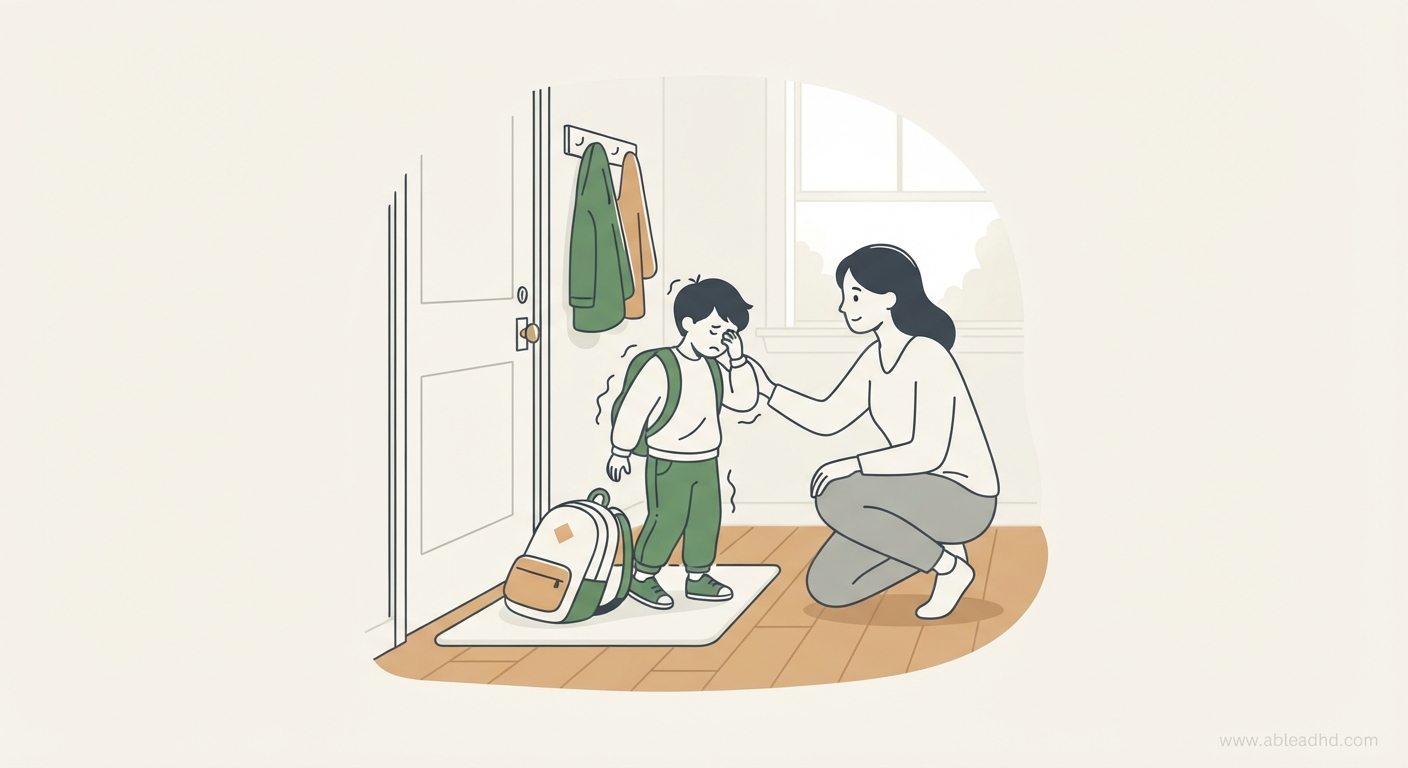
You buckle them into the car, drive home, walk through the front door, and—boom. Within ninety seconds, backpacks are flying, screams echo down the hallway, and your child is melting down in a puddle of tears over the "wrong" color cup.
If this scene sounds intimately familiar, you are witnessing the After-School Restraint Collapse. As a clinician, I frequently reassure exhausted parents that this phenomenon does not mean your parenting is failing. Instead, it means your child's brain has run completely out of gas.
What is Happening Inside the ADHD Brain?
Throughout the school day, children with Attention-Deficit/Hyperactivity Disorder operate in an environment that demands constant neuro-exertion. To keep pace with neurotypical peers, they must continuously suppress impulses, manage sensory overload from fluorescent lights and bustling hallways, and regulate their attention.
This process, often called "masking" or self-regulation, requires executive functions managed by the prefrontal cortex. For an ADHD nervous system, this is like running a marathon in heavy boots all day. When your child finally crosses the threshold into the safety of home—and into the presence of their primary attachment figure—their nervous system instantly unloads the heavy burden it has been carrying. They do not hate you; rather, your presence is their safe space to finally fall apart.
Crafting a Post-School Decompression Routine
Trying to interrogate your child about their day, hand them homework, or assign chores immediately after school is a recipe for disaster. Their emotional cup is not just empty; it is shattered. To restore peace, you need a proactive, step-by-step transition protocol that resets their nervous system before any demands are introduced.
Step 1: The "Zero-Demand" Transition (The First 20 Minutes)
- Silence the Inquisition: Resist the urge to ask, "How was your day?" or "Did you eat your lunch?" Silence is golden during this window.
- Feed the Brain: Low blood sugar routinely exacerbates emotional dysregulation. Hand them a high-protein, high-fat snack (like cheese cubes, nuts, or a turkey roll-up) the second they get in the car or through the door, without requiring them to speak.
- Visual Quiet: Turn off screens, turn down house lights if possible, and turn off the car radio. Reduce incoming sensory input.
Step 2: Heavy Work and Proprioceptive Input
The ADHD nervous system often needs intense physical input to organize itself. Proprioception—awareness of the body in space—has a profoundly calming effect on the limbic system.
- Heavy Lifting: Have them carry the groceries inside, push a laundry basket across the floor, or wear a weighted backpack for a short walk from the car.
- Movement Breaks: Incorporate trampoline jumps, wall pushes, or bear crawls down the hallway.
Step 3: Pacing Academic and Social Demands
Once your child has successfully decompressed—usually after 20 to 30 minutes of low-demand autonomy—you can slowly reintroduce expectations. Keep homework sessions short, highly structured, and peppered with movement breaks. By honoring their neurological need for recovery time, you transform the chaotic afternoon hour into a predictable, manageable bridge between school and home.
References
- Barkley, R. A. (2015). Attention-Deficit Hyperactivity Disorder: A Handbook for Diagnosis and Treatment (4th ed.). Guilford Press.
- Centers for Disease Control and Prevention (CDC). (2023). Symptoms and Diagnosis of ADHD in Children. U.S. Department of Health and Human Services.
- Greene, R. W. (2014). The Explosive Child: A New Approach for Understanding and Parenting Easily Frustrated, Chronically Inflexible Children. HarperCollins.
Tired of explaining your child’s ADHD to every teacher?
Upload your clinical diagnosis report and instantly generate a one-page, teacher-ready brief with evidence-based strategies in 2 minutes.
Create Your Free Teacher Brief →