
The Car Ride Decompression Hack: How to Reset Your ADHD Child's Nervous System Before Walking Through the Front Door
Published by The Able Blog | Date: 2026-09-14
TL;DR
- The "Restraint Collapse" Reality: Children with ADHD expend immense energy masking, sitting still, and processing sensory overload all day at school, leading to predictable meltdowns the moment they reach the safety of home.
- The Car as a Bridge: Rather than diving straight into homework or chores, use the vehicle as a low-demand, sensory-reset chamber to bridge the gap between structured environments and family life.
- Actionable Rituals: Implement sensory-rich, zero-pressure decompression habits—such as listening to a preferred audiobook in silence, heavy-work snack breaks, or temperature shifts—to regulate the nervous system before unlocking the front door.
Understanding the After-School Meltdown: Why the Car Ride Matters
Picture this: You pick up your child with ADHD from school. They buckle in, and within three minutes, minor friction occurs—a dropped water bottle, a song they dislike on the radio, or a simple question about their day—and it instantly triggers a full-blown emotional explosion.
As a clinician, parents often ask me why their child can hold it together for teachers and peers all day, only to completely fall apart the second they see their parents. The answer lies in a phenomenon known as "restraint collapse."
Children with neurodivergent nervous systems spend the entire school day working overtime. They regulate their impulses, sit in uncomfortable chairs, filter out fluorescent lighting, and suppress their natural need for movement. By the time the final school bell rings, their emotional and cognitive battery is entirely depleted. The car ride home is the first safe space where they can finally let their guard down.
Unfortunately, standard parenting routines often view the car as mere transportation. We transition instantly from the structured chaos of school to the demands of home—asking questions, checking backpacks for notices, or rushing off to soccer practice. For an ADHD child whose nervous system is already screaming in overdrive, this sudden shift feels like pouring fuel on a fire.
The Neurobiology of Transition Friction
Executive dysfunction makes shifting between tasks and environments exceptionally difficult. Children with ADHD struggle with the cognitive flexibility required to switch gears from "school mode" to "home mode." When we fail to provide a transitional buffer, their autonomic nervous system remains trapped in a state of fight-or-flight, making emotional regulation virtually impossible once they cross the threshold of the house.
Creating the Pre-Door Decompression Ritual
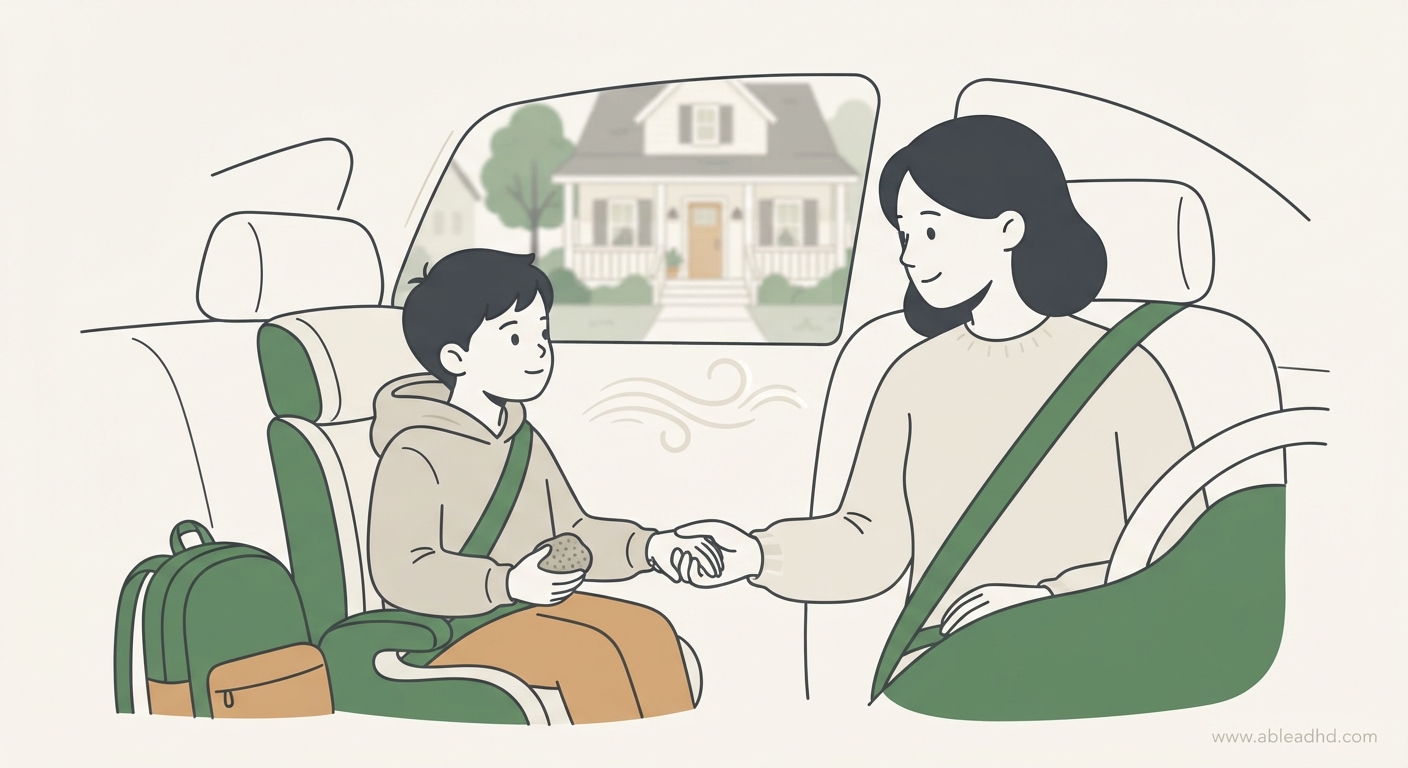
To prevent the classic post-school meltdown, we need to redefine the car ride. Instead of a transit zone, treat the vehicle as a decompression chamber. The goal is simple: lower environmental demands, regulate the sensory system, and discharge accumulated stress before anyone steps foot inside the house.
1. Enforce a "Low-Demand" Zone
The golden rule of the post-school car ride is zero interrogation. Resist the urge to immediately ask, "How was your day?" or "Did you turn in your math assignment?" These questions require cognitive processing, recall, and expressive language skills—resources your child simply does not have right now.
- Establish Quiet Time: Agree that the first 10 minutes of the drive happen in relative silence. Let your child decompress without verbal demands.
- Audio Bridges: Put on an engaging audiobook, a familiar podcast, or instrumental music. This gives their brain an external anchor to latch onto without requiring interaction.
- Parallel Play: If you need to talk, keep it observational and low stakes. Comment on the weather or the scenery rather than probing into their internal state.
2. Leverage Sensory-Rich Resets
Because ADHD is fundamentally linked to differences in sensory processing and dopamine regulation, sensory input is one of the fastest ways to help a dysregulated nervous system find equilibrium.
- The Heavy Work Snack: Chewing and crunching provide proprioceptive input to the jaw, which has a deeply calming effect on the brainstem. Keep crunchy, high-protein snacks (like pretzels, carrots, or beef jerky) ready in the console.
- Temperature Shocks: If your child is prone to angry outbursts or hyperactivity, altering their core temperature can act as a circuit breaker for the nervous system. Keep a cooling mist spray in the car, or offer a cold drink with crushed ice.
- Tactile Anchors: Keep a weighted lap pad, a favorite textured plush toy, or a discreet fidget tool within arm's reach in the back seat. Letting them squeeze or hold something tactile helps process residual physical tension.
3. The Five-Minute "Pause and Reset" in the Driveway
Sometimes, the drive is too short to fully decompress. If you arrive home and sense that your child’s nervous system is still revving, do not get out of the car immediately.
Park in the driveway, turn off the ignition, and stay put for five extra minutes. Sit together in the quiet car. This intentional pause signals to your child’s brain that there is no rush to meet the next demand. Use this time to breathe deeply, listen to one final song, or simply let them stare out the window until their shoulders drop and their breathing regulates.
Bringing It All Together Across the Threshold
Once your child’s nervous system has had the opportunity to vent its accumulated pressure, the transition through the front door changes entirely. You will likely notice a dramatic decrease in the intensity of home-entry friction.
By proactively managing the transition gap, you are not only saving your evenings from unnecessary meltdowns; you are teaching your child a lifelong self-awareness skill. Over time, they will begin to recognize their own internal state of overload and instinctively lean into these sensory and environmental pauses, building resilience that extends far beyond the family car.
References
- Barkley, R. A. (2015). Attention-Deficit Hyperactivity Disorder: A Handbook for Diagnosis and Treatment (4th ed.). Guilford Press.
- Brown, T. E. (2013). A New Understanding of ADHD in Children and Adults: Executive Functions Assured. Routledge.
- Ayres, A. J. (2005). Sensory Integration and the Child: Understanding Hidden Sensory Challenges. Western Psychological Services.
Tired of explaining your child’s ADHD to every teacher?
Upload your clinical diagnosis report and instantly generate a one-page, teacher-ready brief with evidence-based strategies in 2 minutes.
Create Your Free Teacher Brief →