
← Back to all posts
•1 min read•Able ADHD Editorial
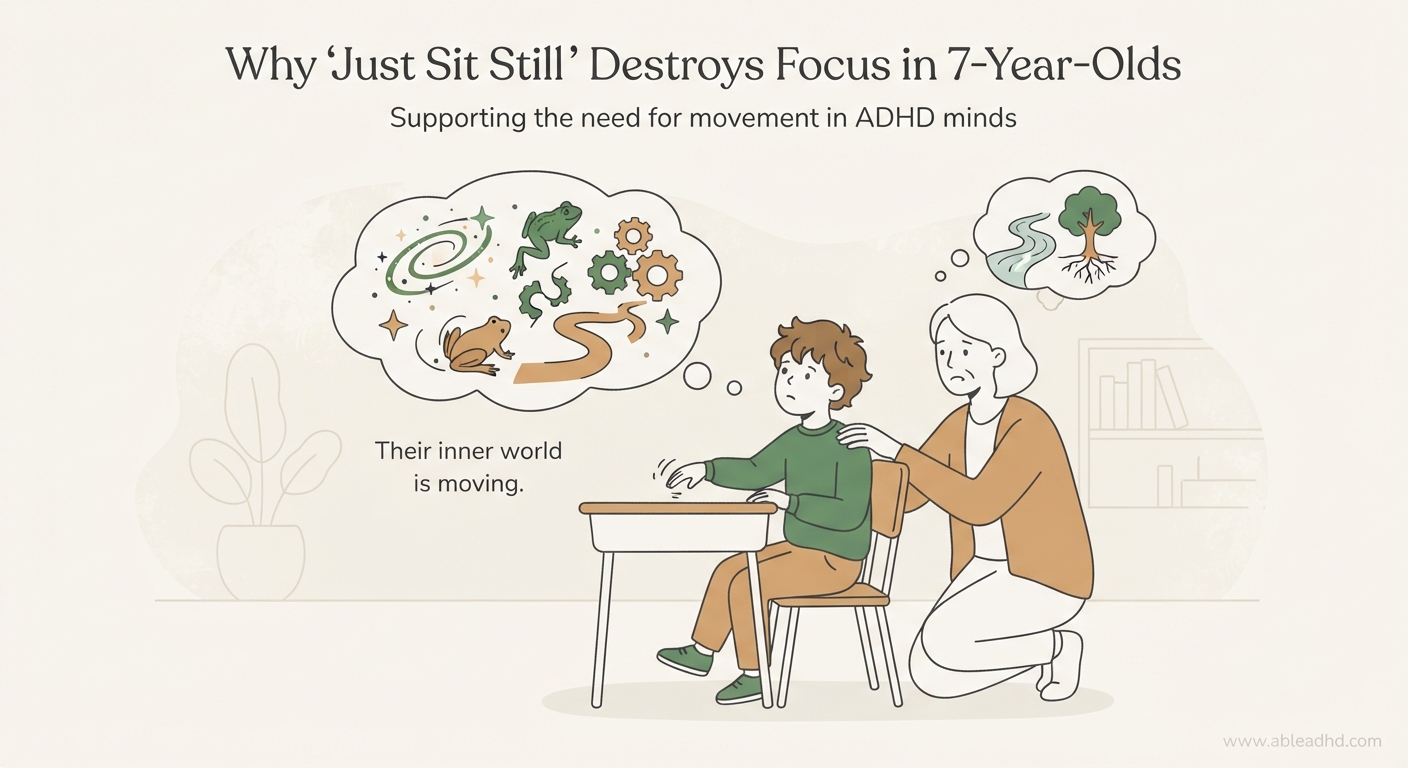
Why 'Just Sit Still' Destroys Focus in 7-Year-Olds
Published by The Able Blog | Date: 2026-08-20
TL;DR
- The Core Issue: Traditional advice tells kids to conform, ignoring the underlying neurobiology of executive function.
- The Shift: Move away from punitive discipline and toward environmental design and dopamine-friendly scaffolding.
- The Takeaway: Small, friction-reducing adjustments create massive behavioral shifts at home and school.
Understanding What's Actually Happening
When standard parenting tactics fail repeatedly, self-doubt creeps in. But neurodiversity is not a failure of parenting; it is a difference in brain regulation. When tasks lack immediate feedback, dopamine levels drop, leading to genuine paralysis [1].
What Actually Works:
- Lower the friction: Reduce the number of steps required to initiate a task.
- Externalize time and structure: Make invisible concepts visible using physical cues, visual timers, or shared checklists.
- Radical patience: Protect your relationship with your child by removing unnecessary battles of willpower.
Closing the Gap Between Intention and Action
Parenting an ADHD child demands that we abandon perfectionism. Some days will still end in exhaustion. But when we stop fighting our children's neurobiology and start structuring their environment, the friction drops.
References
- Barkley, R. A. (2012). Executive Functions: What They Are, How They Work, and Why They Evolved. Guilford Press.
- Centers for Disease Control and Prevention. (2024). Behavioral Therapy for Children with ADHD. U.S. Department of Health and Human Services.
- Sarver, D. E., Rapaport, S. J., Kofler, M. J., Raiker, J. S., & Alderson, R. M. (2015). Hyperactivity in Children with ADHD: Impairment or Compensation? Journal of Abnormal Child Psychology, 43(7), 1219–1232.
Tired of explaining your child’s ADHD to every teacher?
Upload your clinical diagnosis report and instantly generate a one-page, teacher-ready brief with evidence-based strategies in 2 minutes.
Create Your Free Teacher Brief →